Buying at Sugar Sands in 2026: The Milestone and SIRS Questions That Actually Change Your Contract
Two buyers walk into Sugar Sands the same weekend. One writes on a first-floor waterfront residence in a two-story building along an interior canal. The other writes on a third-floor unit with an intracoastal view in one of the community's taller buildings. Same community, same association, same monthly assessment structure. Under Florida's post-Surfside inspection framework, they are in two different regulatory worlds, and only one of them needs to read the milestone report before removing contingencies.
That distinction is the point of this post. At a community like Sugar Sands, where the building stock is a mix of one-, two-, and three-story structures dating to the 1970s, the single most useful piece of due diligence a buyer can do in 2026 is confirm which building the unit sits in and then ask the questions that follow from that answer.
Florida's milestone inspection statute is scoped narrowly. Section 553.899 requires condominium and cooperative associations responsible for buildings three or more habitable stories to commission a structural inspection by a licensed engineer or architect when the building reaches a defined age, 25 years for coastal buildings within three miles of a coastline and 30 years for inland buildings, with subsequent inspections every 10 years. Sugar Sands sits directly on the Intracoastal on the west side of Singer Island, well inside the three-mile coastal threshold.
Here is how that maps to the community itself.
| Building type at Sugar Sands | Approximate count | Milestone applies? |
|---|---|---|
| One-story building | 1 | No, under the three-story floor |
| Two-story buildings | 13 | No, under the three-story floor |
| Three-story buildings | 8 | Yes, coastal 25-year rule triggered |
If your target unit sits in one of the eight three-story buildings, the milestone conversation is live and the SIRS conversation follows it. If your target unit is in one of the fourteen shorter buildings, the milestone requirement does not attach to that structure at all, though the association still has broader financial reporting and reserve obligations under Chapter 718.
That is not a detail the portal listing will surface. It is the first question to ask.
The Structural Integrity Reserve Study is a financial planning tool for a defined list of components. Under 718.112(2)(g), associations can no longer waive reserves for the eight mandatory SIRS components: roof, load-bearing walls and primary structural members, fire protection, plumbing, electrical, waterproofing, windows and exterior doors, and any other item with a deferred maintenance or replacement cost exceeding $10,000. The reserve threshold has since increased from $10,000 to $25,000, indexed to inflation.
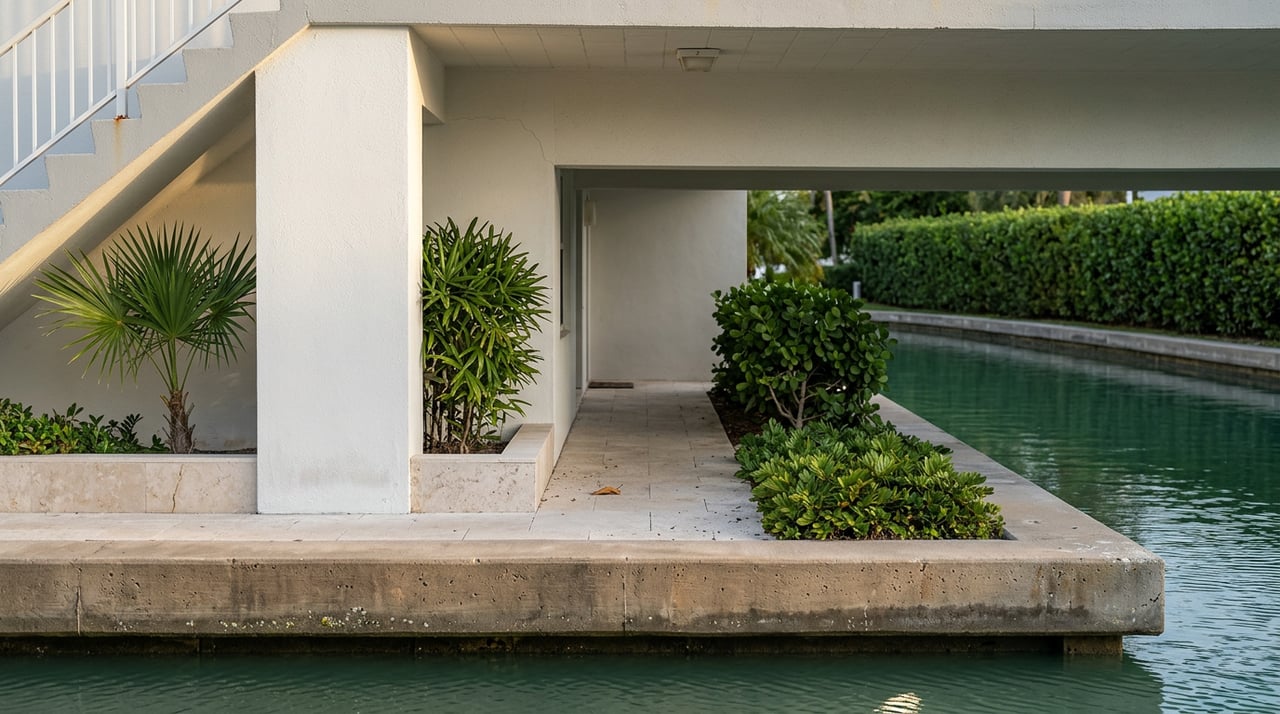
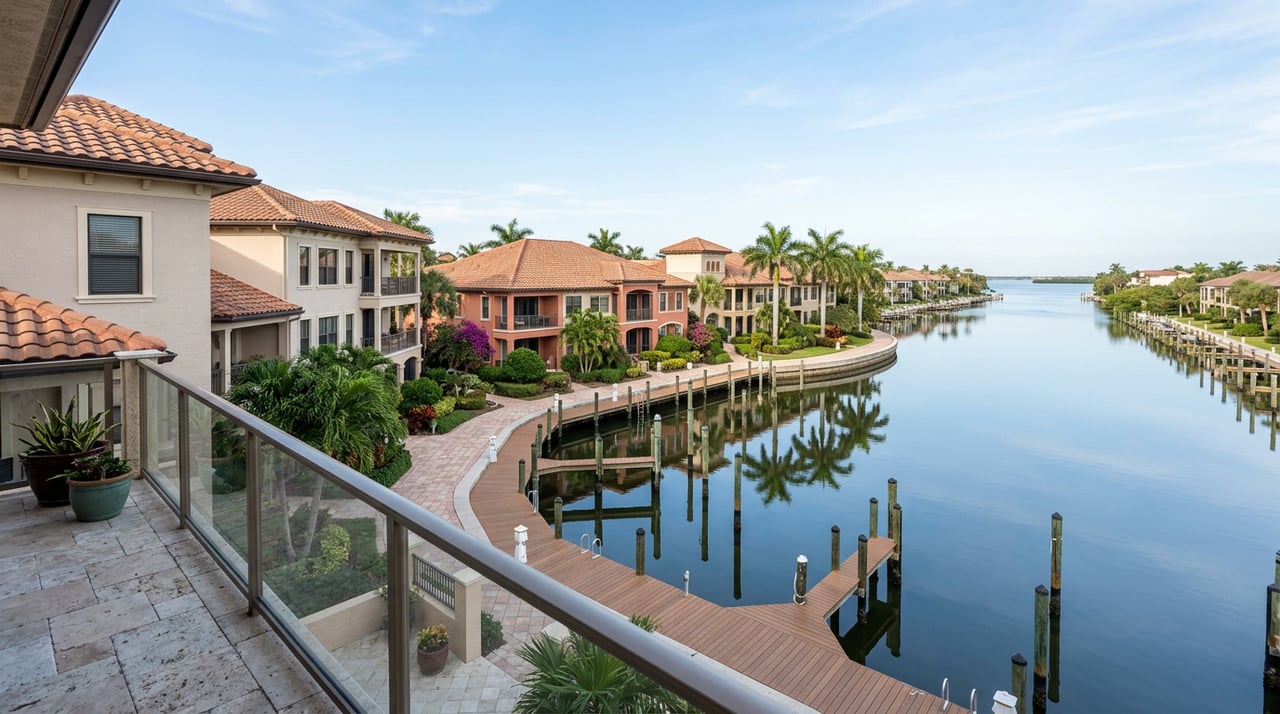
Read that list against what Sugar Sands actually owns. The association maintains 83 intracoastal boat docks sized for 22- to 35-foot vessels, seawalls along the canal system, an Olympic-size pool with a separate wading pool, tennis and pickleball courts, shuffleboard, and clubhouse infrastructure. The dock and seawall components are exactly the kind of coastal, salt-exposed assets that will drive replacement cost lines in a study, and they are the reason a canal-facing unit's reserve exposure is not identical to a garden-side unit's exposure even inside the same association budget.
Full reserve funding must begin by January 1, 2026. Non-structural components such as landscaping, pool equipment, and clubhouse furnishings can still be waived with a majority member vote, but the big-ticket items that drive special assessments are now locked in. Practically, that means the reserve line on the estoppel you receive at closing in 2026 will look different from what a Sugar Sands owner paid in 2023, and a buyer should ask why the delta is what it is.
The following requests belong in the contract's inspection or association-approval period. Every one of them has a Sugar Sands-specific angle.
Conventional financing on a Florida condo now depends on documents the association controls, not the buyer. If the target building is on Fannie Mae's unavailable list, a conforming loan is off the table and the buyer is looking at cash, portfolio lending, or a different unit. That determination is often made by the lender's condo review team well after the appraisal is ordered.
A buyer at Sugar Sands should front-load this. Ask the lender within the first week of the contract to run the specific building through the condo project review, and have your agent request the association's compliance packet in the same window. If either comes back with a gap, the buyer still has time inside the inspection period to renegotiate or walk. Waiting until financing contingency expiration is how a clean deal turns into a rescheduled closing.
Sugar Sands has two features that draw buyers who could otherwise shop anywhere on Singer Island. The first is the deeded boat slip inventory, capacity 22 to 35 feet with 8 to 10 foot beam. The second is a small set of single-story villas that live like ranch homes with private outdoor space, a floorplan that does not exist in the oceanfront towers on the east side of A1A.
For dock slip buyers, the diligence extension is the seawall. A seawall assessment does not appear as a separate line on the mortgage disclosure. It appears in the SIRS or a special assessment resolution. Ask.
For villa buyers, the milestone rule does not attach to the villa itself, because it is a single story. That is a genuine advantage. It is also a reason to read the master association's budget carefully, because villa owners still pay into the same reserve pool that funds structural work on the three-story buildings.
Is Sugar Sands a 55-plus community? Yes. Sugar Sands is an active adult 55 and over condominium complex located on Singer Island in Riviera Beach, Florida. The Housing for Older Persons Act treats that as a lawful community classification, and it is stated here as a factual amenity, not a preference.
What are the leasing rules for an investor buyer? Leases are permitted with a 90-day minimum and one-year maximum with renewals. That rules out short-term vacation rental strategies and shapes the community toward seasonal and annual tenants.
If a Phase 2 inspection is triggered after I close, what am I on the hook for? The association is the party required to complete repairs, but funding flows from owners. HB 913 provides additional tools for associations facing major repair obligations, and for budgets adopted on or before December 31, 2028, an association that completed a milestone inspection within the previous two calendar years may temporarily reduce or pause reserve contributions. Read that as a signal that assessments and reserve strategy are actively moving pieces, and the numbers in your estoppel are not necessarily the numbers you will see in your first annual budget as an owner.
The value in a Sugar Sands purchase in 2026 is not hidden in the listing photos. It is hidden in the building number on the recorded deed and the paragraph of the SIRS that describes it. If you are working through an offer on the west end of Singer Island and want a second read on the compliance packet, the estoppel, and what the numbers imply for your first three years of ownership, that is the work worth doing before you sign.
Request a private consultation with Kathy Lewellen and we will read the building-level documents alongside you.
Get assistance in determining current property value, crafting a competitive offer, writing and negotiating a contract, and much more. Contact her today.