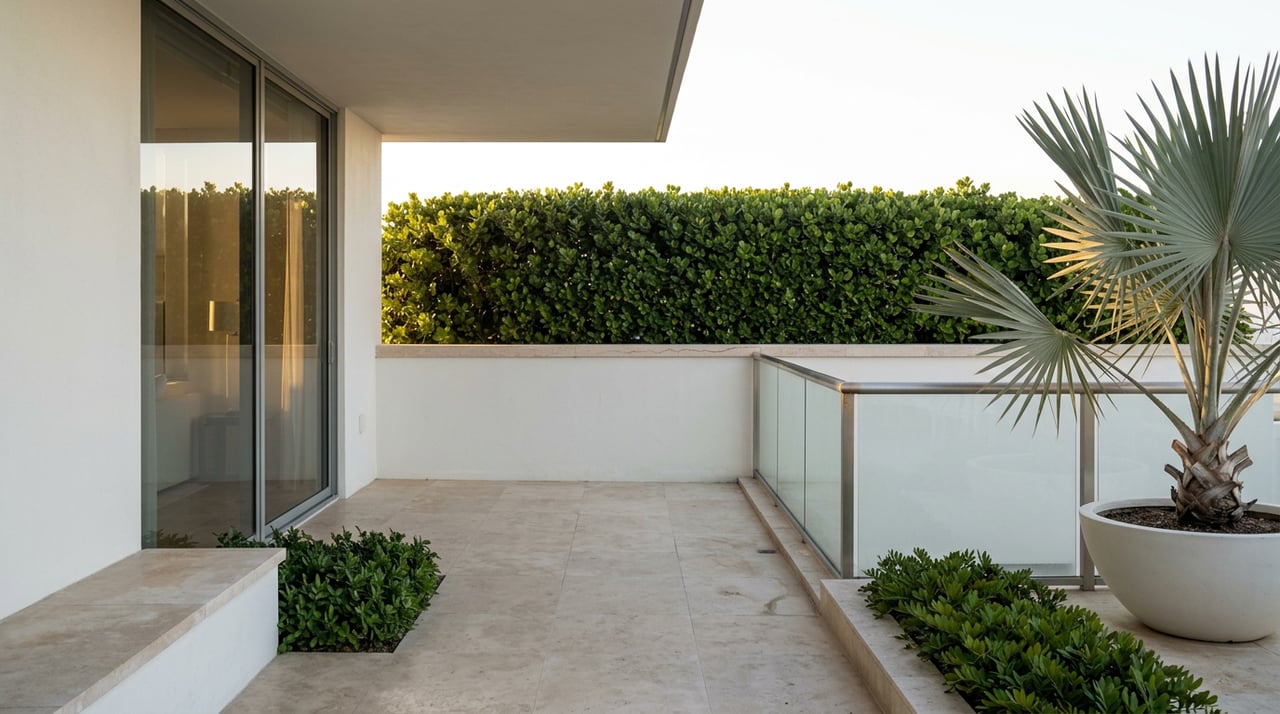
Why Fixing the Beach at One Singer Isn't a Money Problem
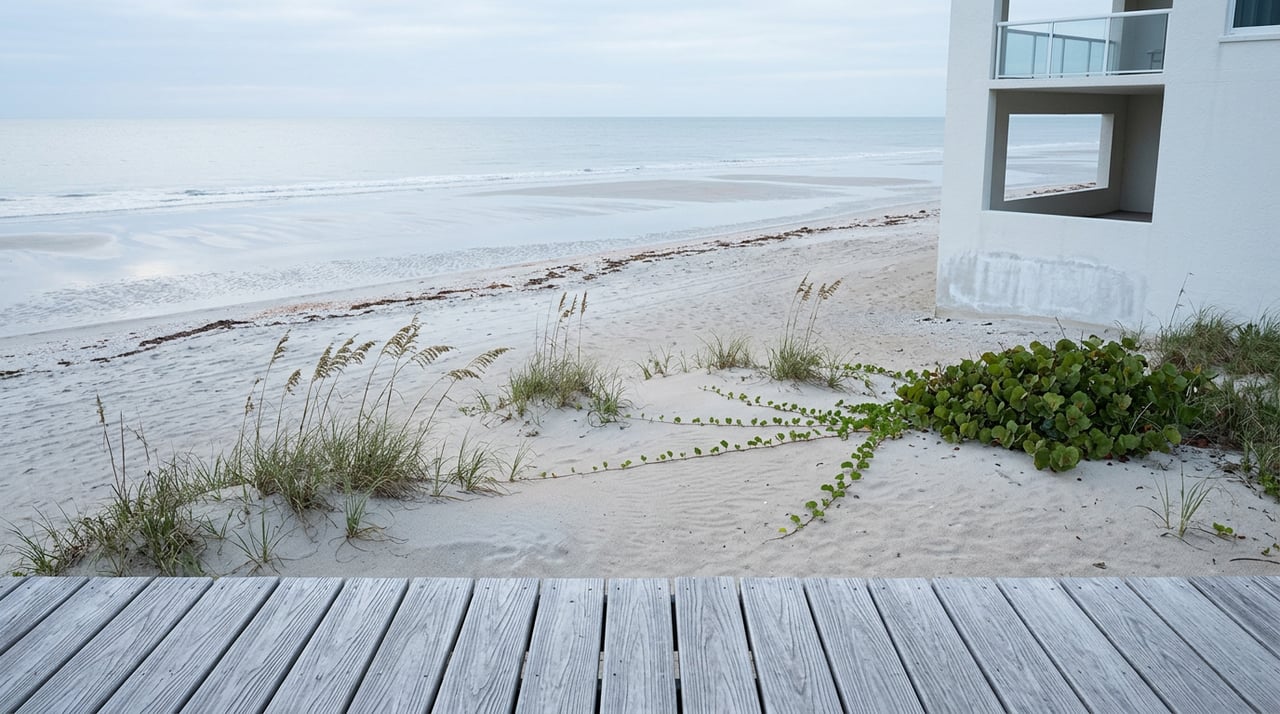
Stand on a north-facing balcony at One Singer this summer and look straight down. County engineers photographed nearly the same view in December: ocean water reaching the seawall at low tide, not high tide, along a half-mile stretch of Singer Island's north end. That photograph became part of a discussion about beach erosion and the role of seawalls along this stretch.
Most buyers touring a north-end tower ask the obvious question: is Palm Beach County going to fix the erosion? The honest answer is more complicated than money, and that's the part worth understanding before you write an offer. This isn't a story about a government running out of funds. The county has spent more than $21.7 million on dune restoration along this stretch over the past two decades. The challenge also involves the existing seawalls and the limited dry beach available for restoration.
According to STET News, Florida and federal law require that new sand be placed on dry beach. Not the wet strip that appears at low tide, actual dry sand above the high water mark. As erosion accelerated on Singer Island's north end over the past decade, condo owners responded the way any rational owner would: they built private seawalls to protect their buildings. Those walls constrain the space available for restoration crews.
Andy Studt, the county's coastal resources management program supervisor, put it directly to residents at a December 2025 town hall. The county does not fault property owners for protecting themselves, he said, but the walls have created a real problem: they leave the beach with no way to recover on its own without a fresh supply of sand. That leaves restoration planners with a difficult starting point along this stretch of the island. The county identifies that limitation as one of the challenges in planning restoration.
Sue Melamud, an environmental engineer and longtime resident in the affected zone, framed it more personally when she spoke to WLRN in June: "I love my home and I want to protect it." Across the seventeen buildings, the seawalls are one of the constraints facing a public restoration effort.
The stalemate has a paper trail. Here's how the past six months unfolded, through both governments' own public statements:
| Date | What happened |
|---|---|
| Dec 16, 2025 | Riviera Beach and county officials hold a town hall at the Marina Village Event Center. Officials confirm no dune restoration is planned for the north end that winter. |
| March 9, 2026 | The Singer Island Environmental Committee submits a petition with several hundred signatures to county commissioners, citing declining sales activity tied to beach loss. |
| April 2026 | County staff issue a 16-page written response confirming no restoration this year, pointing instead to a feasibility study not due until summer 2027. |
| May 2026 | Riviera Beach sets aside $77,000 to hire coastal engineering firm Baird for an emergency, city-led dune project. |
| June 2026 | The city confirms a 1.2-mile emergency project stretching from the Cote D'Azur condominiums, just north of Ocean Reef Park, to Water Glades, estimated at up to $6 million and still awaiting a state permit. |
Notice what's missing from that timeline: an actual shovel of sand. Every line is a meeting, a petition, a letter, or a budget allocation. The city is now attempting, unilaterally, what a ten-year interlocal agreement with the county was supposed to guarantee, and even that emergency fix still needs state sign-off before work can begin.
One Singer differs from its neighbors on this stretch in one structural way that matters more than its view. The building holds only fifteen residences, among the smallest owner counts of any luxury tower on the island. Every shared cost, from the seawall itself to the reserve required to maintain it, gets divided by a far smaller group of owners than at the larger towers sharing this same stretch of coastline. Recent listings for the building put its median association fee near $5,284 a month, a number that already reflects a handful of owners funding everything an oceanfront address requires.
Florida's tightened condo rules add another layer this building can't avoid. According to Criterium-Cromer, every applicable association had to complete an initial Structural Integrity Reserve Study by December 31, 2025, and starting with budgets adopted that year, reserves tied to structural components can no longer be waived or underfunded. A seawall that's part of the condominium property can be treated as one of those structural components under the current framework. If One Singer's is, the funding plan for it stops being optional, and at a building with fifteen owners, that plan lands on each of them at a weight a larger association simply doesn't carry the same way.
Melamud's own estimate of unit prices across the seventeen affected buildings, $600,000 to $4 million, undersells what a boutique tower like One Singer commands. The exposure to the underlying dispute is identical regardless of price point. The building on the erosion map doesn't know what your penthouse is worth.
The most useful number in this entire fight isn't the $21.7 million the county has spent, or the $6 million the city hopes to spend. It's a statement the Environmental Committee's co-chairs put in writing to commissioners in March, as reported by WFLX: "We have seen a significant decline in both sales prices and sales volume over the past year." They attributed it to realtors reporting complaints from potential buyers and tourists about the lack of beach area.
That's a market signal that arrived before any special assessment, before any SIRS-triggered bill, before the feasibility study has even finished. For anyone selling at One Singer, the committee's reported decline and its account of complaints about beach area are context to consider when reviewing comparable listings.
None of these questions show up in a listing photo, and none of them will slow down a well-prepared closing. They can help you identify the issues to raise during due diligence before you make an offer.
If you're weighing a purchase or sale on Singer Island's north end, the smartest first step isn't another search filter. It's a conversation about what a specific building's paperwork actually says about its exposure. Kathy Lewellen has spent two decades tracking how Singer Island's towers differ from each other, building by building, including reserve studies and interlocal agreements relevant to north-end buildings. Request your home valuation and market consultation to talk through what a north-end purchase or sale looks like this year.
This article is general information, not legal, tax or financial advice. Consult a qualified professional about your situation.

Get assistance in determining current property value, crafting a competitive offer, writing and negotiating a contract, and much more. Contact her today.