Oasis Twin Towers: How Unit Count Shapes Fees and Resale
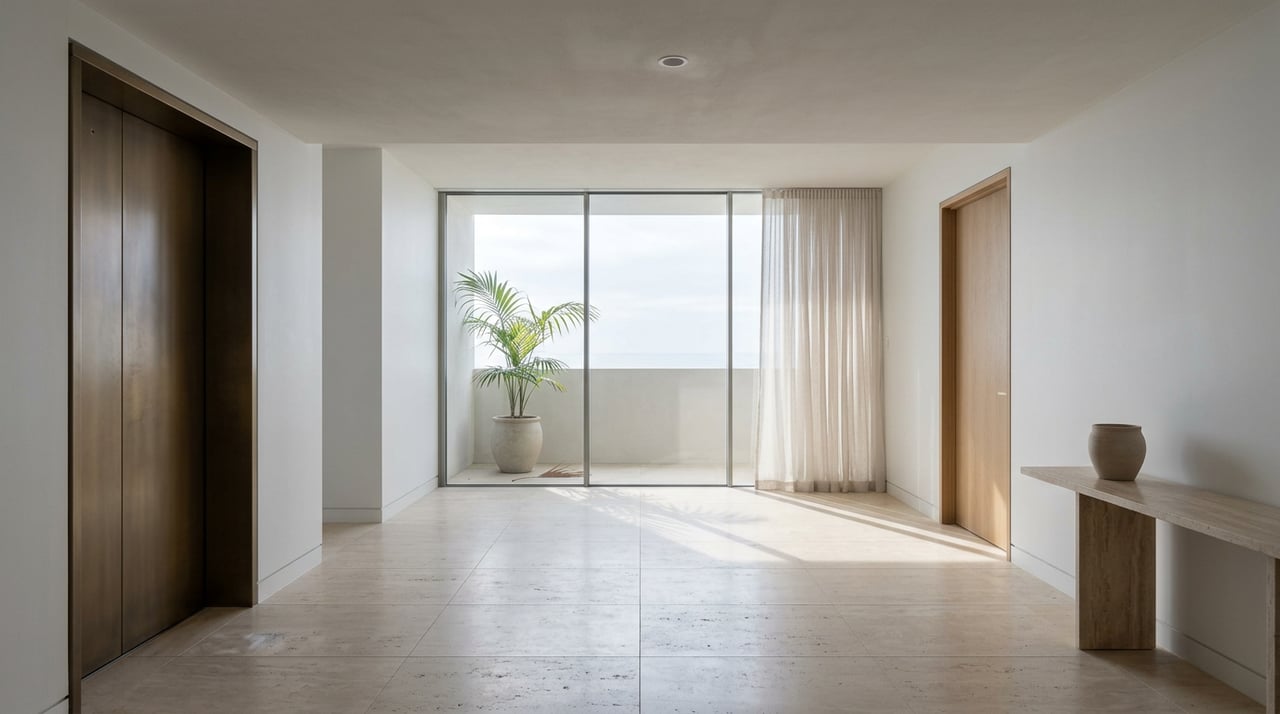
Step off the elevator at Oasis Twin Towers and there is no hallway. No neighbor's door ten feet from yours, no shared corridor carpet, no polite nod to someone else's welcome mat. The elevator opens directly into your own foyer, because at Oasis, one residence occupies the entire floor. It is the building's signature feature and the reason it shows up on so many "most exclusive" lists for Singer Island.
It is also the reason a prospective buyer should look past the price per square foot before comparing Oasis to almost anything else on the island.
Oasis sits at 3920 N Ocean Dr, built in 2004 as two oceanfront towers with 19 residences apiece, one per floor, 38 homes in total. Each unit runs about 4,069 square feet under air, plus close to 800 square feet of wraparound terrace facing the ocean, the Intracoastal, or both. That is genuinely rare inventory. It is also a genuinely small roster of owners to carry the building's fixed costs.
Compare that to Tiara, a few miles up the road, where 320 units share the same categories of expense: roof, elevators, facade, insurance, staffing. Or Phoenix Towers, where 176 owners split those same line items across two 24-story towers built in 1973. The building type is the same. The obligations are the same. The number of people paying for them is not.
This is the part that portal listings never show, because a listing shows price, square footage, and a photo of the pool. It does not show the denominator.
Phoenix Towers publishes dues that run roughly $670 a month for a 1,219-square-foot unit, which works out to about 55 cents per square foot. That fee is spread across 176 owners.
One Singer Island, a much smaller building a short distance north with only 15 full-floor and penthouse residences built in 2006, carries a reported median association fee of $5,284 a month. Against residences in the 2,900 to 3,500-square-foot range, that puts the fee at roughly three times Phoenix Towers' rate on a per-square-foot basis.
Some of that gap comes from finishes, staffing level, and insurance exposure on a full-ocean-facing penthouse. But a meaningful share of it comes from simple arithmetic. Fifteen owners covering the same categories of building expense that 176 owners cover elsewhere will each carry a heavier line item, because the roof does not get cheaper just because fewer people are paying for it.
Oasis sits between those two examples on the unit-count spectrum, closer to One Singer's end than to Phoenix's. Thirty-eight owners is a small enough group that the same math applies with real force, even without a full-service concierge staff or a Ritz-branded pool deck driving costs up further. Oasis does not publish its current dues the way some buildings do, so the exact number is something to request directly from the association rather than infer from a listing sheet. What is not in question is which side of the math Oasis sits on.
There is a second, more time-sensitive reason this matters right now. Following the 2021 Champlain Towers South collapse in Surfside, M2E explains that Florida passed Senate Bill 4-D in 2022, which created two separate obligations for condo associations statewide: a structural milestone inspection tied to a building's age, and a Structural Integrity Reserve Study, or SIRS, that evaluates whether an association has set aside enough money to cover the eventual replacement of major structural components.
The milestone inspection has an age trigger. Buildings within three miles of the coast face their first inspection at 25 years from the certificate of occupancy. Oasis, with a 2004 completion date, will not hit that mark until roughly 2029.
The SIRS requirement runs on a different clock, and it does not wait for a building to age into it. Associations that existed on or before July 1, 2022, and are unit-owner controlled, were required to complete an initial reserve study by December 31, 2025. That deadline has already passed. Which means a completed SIRS for Oasis should exist today, and a buyer evaluating the building has every reason to ask for it before comparing dues across properties.
The reserve study is the document that turns the abstract math above into a real number. It lists what the roof, the elevators, and the facade are worth, how much life is left in each, and how much the association needs to be setting aside every month to fund the eventual repair or replacement. For a 38-unit building, that funding schedule gets divided by 38. Read alongside the association's current budget, it tells a buyer whether the monthly fee reflects the true cost of maintaining an oceanfront structure with a small ownership base, or whether a special assessment is likely down the line. Palm Beach County's building division tracks the separate milestone timeline, but the reserve study is the association's document to produce, not the county's.
The same low headcount that drives the fee math also shows up on the resale side. As of July 2026, Oasis carried just two active listings, asking between $3.9 million and $4.8 million, with an average time on market of 116 days. That is a longer runway than most higher-density Singer Island buildings see at a comparable price point, and it is not really a story about pricing mistakes.
With only 38 total owners in the building, and full-floor residences that tend to change hands infrequently once a family settles into one, there simply are not that many transactions to compare against in any given year. Fewer comparable sales means appraisers and buyers alike are working with a thinner data set than they would at Tiara or Phoenix Towers, where dozens of units trade in a typical year. That thinness cuts both ways. It can mean more negotiating room for a patient buyer. It can also mean a seller waits longer to find the specific buyer who wants exactly this kind of space, because there is no volume of similar listings creating urgency.
None of this makes Oasis a harder building to recommend. Full-floor privacy, private elevator entry, and 4,000-plus square feet of interior living space with terraces on three sides are real, differentiated features that a lot of Singer Island inventory simply does not offer. The point is narrower than that. A buyer comparing Oasis to a 176-unit or 320-unit building purely on price per square foot is missing the variable that actually explains a chunk of the fee difference, and a seller listing a unit there should expect a longer, more patient marketing window than the comps from a bigger building would suggest.
Request the current operating budget and the completed Structural Integrity Reserve Study, not just the amenity sheet. Ask when the last reserve contribution schedule was set and whether it has kept pace with a structure now more than two decades old on direct ocean exposure. Confirm the certificate of occupancy date so you know exactly when the 2029 milestone inspection clock actually starts, separate from the SIRS timeline that has already run its course. And when you're comparing dues across buildings, divide by the unit count before you compare the dollar figure. A $5,000 monthly fee split among 38 owners is telling you something different than the same figure split among 320.
Singer Island's low-density towers reward buyers who read the association documents as carefully as they read the floor plan. If you're weighing a full-floor residence at Oasis against a higher-density alternative elsewhere on the island, or you're ready to bring your own property to a market that rewards patience and precise positioning, Kathy Lewellen can walk through the reserve study, the budget, and the comparable sales with you before you make a decision that size. Request your home valuation and market consultation to start that conversation.
This article is general information, not legal, tax or financial advice. Consult a qualified professional about your situation.
Get assistance in determining current property value, crafting a competitive offer, writing and negotiating a contract, and much more. Contact her today.